a day at the farm
Your day at the Melanes farm
How the Naxos farm class day flows, how to reach Melanes, and what grows around it: olive oil, potatoes, cheese, honey and kitron.
Reserve your place at the farm ↗Quick answer
Yes, it is an easy, rewarding day. The farm sits near Melanes, about ten minutes from Naxos town, with a big parking lot. You tour the animals, olive grove, potato fields and vineyard, cook over a wood fire and finish with lunch and local wine. Wear comfortable shoes, bring sun protection and arrange your own ride, since transport is not included.
The farm day at a glance
| Question | Answer |
|---|---|
| Where | Near the village of Melanes |
| From Naxos town | About 10 minutes |
| Length | About four hours |
| Group | Up to ten guests |
| Parking | A big parking lot |
| Transport | Not included |
| Meeting point | The farm entrance |
Getting to the farm
The farm is near the village of Melanes, about ten minutes from Naxos town, so even a short taxi or drive gets you there. Transport is not included, and the booking calendar shows your start time. There is a big parking lot, which makes driving simple. Staff wait at the entrance of the farm to welcome you, so that is where you head on arrival. The farm has easy access, which helps if anyone in your group prefers level ground. Agree your ride back as well as your ride out. Local wine is part of lunch, so decide in advance who is driving.
Arriving and meeting the animals
The class begins with a welcome and a walk around the small countryside farm. You see rabbits, chickens, peacocks, sheep and a donkey, and you collect freshly laid eggs. Those eggs are the first ingredient of the day. It is a gentle start, and it sets the pace for the day: nothing is rushed, and the group is capped at ten guests, so there is room to ask your guide questions and take your time. Keep your phone handy for photographs, and keep your hands free for the eggs. The live guide speaks English, so if English is your second language, feel free to ask for a point to be repeated. Small groups make that easy, and it keeps the day relaxed for everyone.
The olive grove
The next stop is the olive grove, where your guide explains how the trees are cultivated for oil. Olive oil is one of the pillars of Greek cooking, alongside wheat and wine, and Greece is among the world's larger olive oil producers. Olive trees tend to crop well every couple of years, so a grove looks different from one season to the next. Look at the old trunks and the dry-stone walls around them, and ask your guide what the grove gives the farm's kitchen, and how the oil on your lunch table began as fruit on these branches. Olive oil is also the base of most dishes you will cook later, so this stop explains the plate in front of you.
Read next: What Naxos grows: cheese, potatoes, honey and kitron
The potato fields and the garden
Naxos is well known within Greece for its potatoes, and the farm walk takes you to the fields where Naxian potatoes grow. You then sample freshly picked seasonal fruit and pick vegetables from the garden for lunch. What is ripe depends on your date, so the picking changes with the calendar. The Greek tourism board describes the island's fertile plains as the source of its potatoes, citrons, cheeses and local wines. Here you walk through that description rather than reading it. Potatoes are also the quiet star of Naxian tables, so it is worth asking your guide how the farm cooks them.
Cheese, honey and kitron: the Naxos pantry
Naxos makes more than potatoes. Graviera Naxou is a hard cheese made mostly from cow's milk and carries an EU protected designation of origin, as does Arseniko Naxou. Naxian honey is largely drawn from thyme. Kitron, a citron liqueur made on the island, is traditionally drunk as a digestif, and the first distillery opened in the village of Halki in 1896. Kitron comes in green, yellow and clear versions. Village shops are the easiest place to buy these as keepsakes. Graviera is often sliced, grated or fried as saganaki, so you can meet it in several forms across the island.
Read next: What Naxos grows: cheese, potatoes, honey and kitron
The wood-fire kitchen
Now the cooking begins, over a wood fire. The class makes an omelet, zucchini balls, potatoes and cheese as an appetizer, then a main such as briam or gemista. Briam is a baked dish of vegetables such as potatoes, zucchini, tomatoes and onions, while gemista means filled, usually peppers and tomatoes stuffed with rice. Ask your guide about the technique, such as how to hold the heat on a wood fire. Because the vegetables came from the garden, the dishes taste of the farm. The exact dishes can vary, so treat this list as a guide rather than a fixed menu.
Lunch, wine and dancing
The cooking turns into lunch at the table, with bread, dessert, local wine and homemade fruit preserves. Take your time over it. After the meal, the day can finish with optional Naxian dancing and Greek-style plate smashing, which many guests enjoy. Joining in is up to you, and watching is fine too. If you plan to dance, choose shoes that grip well and feel good on both a farm path and a dance floor. Plate smashing is a Greek party tradition, so expect laughter, and follow your host on how it works.
What to wear and bring
Dress for a day outdoors on a farm. Comfortable shoes matter most, because you walk through an olive grove, potato fields and a vineyard. Add comfortable clothes you do not mind getting a little smoky, plus sunglasses, a sun hat and sunscreen. Travel light so your hands stay free, and charge your phone for photographs. A bottle of water is a handy extra. If anyone in your group has a food allergy or special diet, tell the farm before you book. No special menu is promised, so ask first.
Around Melanes, before or after
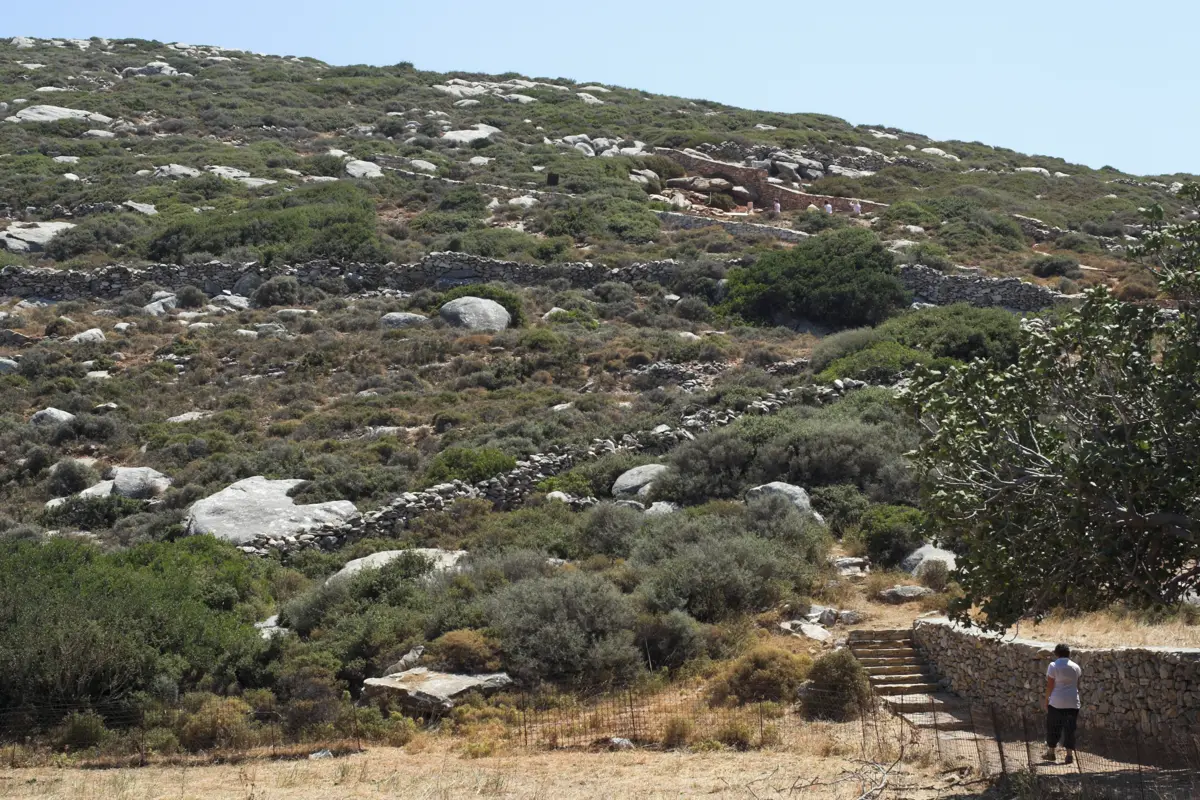
The hills around Melanes hold large unfinished statues. Kouroi were first carved on Naxos in Naxian marble, and unfinished 6th-century BC kouroi lie in the hills near Melanes, at Flerio. The Greek tourism board also points to Apeiranthos, known for its marble-paved alleys, and the warm-coloured village of Halki, where kitron was first distilled. Check the opening details of any site you want to visit before you set out. A morning at the farm and an afternoon among the villages makes a full, rewarding day.
Who this isn't for
If you prefer to eat out rather than cook, a tavern in Naxos town may suit you better. The class needs your own transport, so it is an easier fit for guests who have a car, a taxi or a driver. If you would rather not spend time on a farm path or near animals, choose something else for the day. Everyone else will find it a warm, easy way to taste the island, from the first egg to the last glass of local wine.
Frequently asked questions
How far is the farm from Naxos town?
About ten minutes. The farm is near the village of Melanes and has a big parking lot. The class does not include transport, so you arrange your own ride, and you meet staff at the farm entrance.
What happens at the farm?
You meet the farm animals, collect fresh eggs, walk the olive grove, potato fields and vineyard, pick vegetables, then cook over a wood fire and eat lunch with local wine. The day can end with optional dancing and plate smashing.
What should I wear?
Comfortable shoes and clothes you do not mind getting a little smoky, plus sunglasses, a sun hat and sunscreen. Shoes that grip suit the optional dancing at the end as well as the farm paths.
Do I have to dance and smash plates?
No. The dancing and Greek-style plate smashing at the end are optional, so you can join in or simply watch. Many guests enjoy it, and it is a lively way to finish the afternoon.
What is Graviera Naxou?
It is a hard cheese from Naxos, made mostly from cow's milk, with an EU protected designation of origin. It is sliced, grated or fried as saganaki in Greek cooking, and you will often meet it on Naxian tables.
Can I buy kitron on Naxos?
Yes. Kitron is a citron liqueur made on Naxos, and it is hard to find outside the island, so a bottle is a popular keepsake. Village shops sell it, and tavernas often serve it as a digestif.
Sources